ebanqo
A conversational-AI support platform that lets businesses serve customers across WhatsApp, Messenger, and web from one app.
problem
eBanqo's agents handled live conversations from several channels at once, so the app had to feel instant. On Android in particular, rendering long, busy chat lists was slow, and the AI features on the roadmap needed to respond without a round trip to a server for every message.
solution
I owned the mobile experience: profiling and rebuilding the Android render path, shipping streaming AI chat with on-device intent classification, and packaging the whole thing as an embeddable SDK that other teams could drop into their own apps.
Android performance was the first fix. I profiled the UI thread, cut wasted re-renders, and reworked the chat list so it stayed smooth under load. The result was a roughly 40 percent improvement in Android responsiveness on the screens agents live in all day.
For the AI work, I integrated streaming chat backed by on-device intent classification using Core ML on iOS and TensorFlow Lite on Android. Running intent detection on the device meant replies felt immediate and kept working even on a weak connection, rather than waiting on the network for every keystroke of context.
To make the investment reusable, I packaged the chat experience as an embeddable SDK with native modules in Swift and Kotlin. External teams adopted it directly, which turned one product's chat surface into shared infrastructure across several apps.
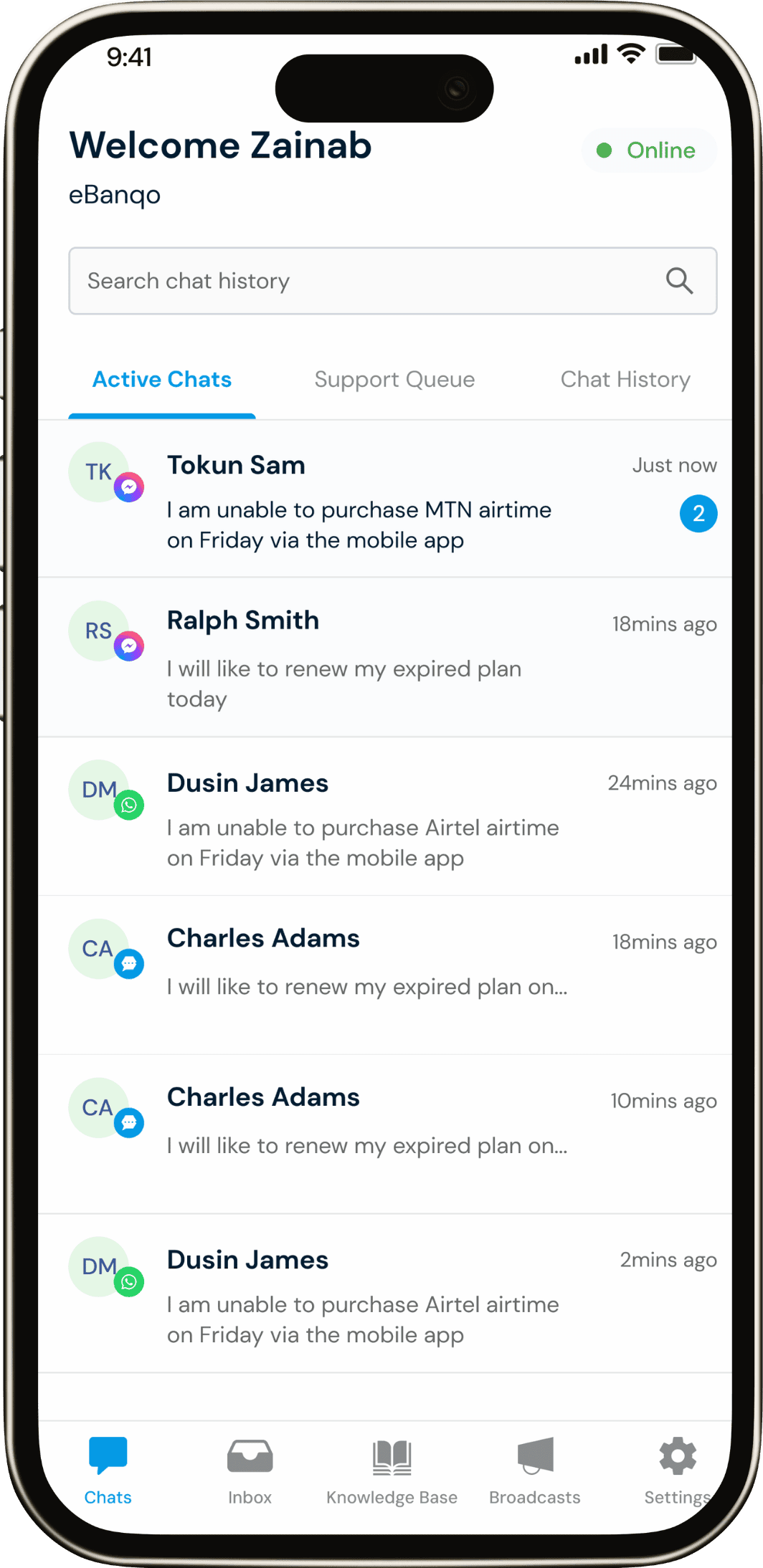
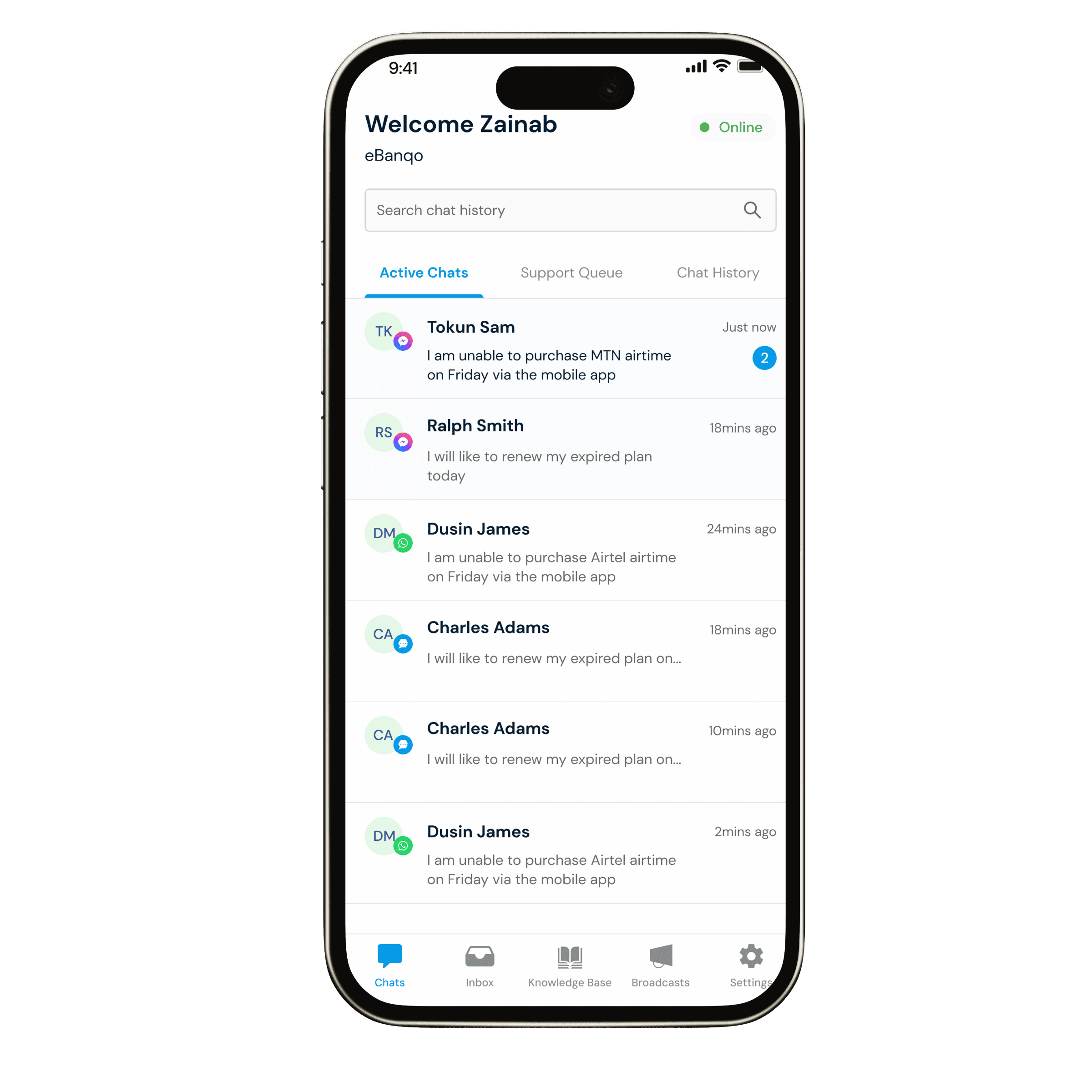
The agent console: active chats, support queue, and history unified across every channel.
Streaming replies with on-device intent classification keep conversations instant.